 Kuang Si Falls Tours
Can You Swim in Kuang Si Falls?
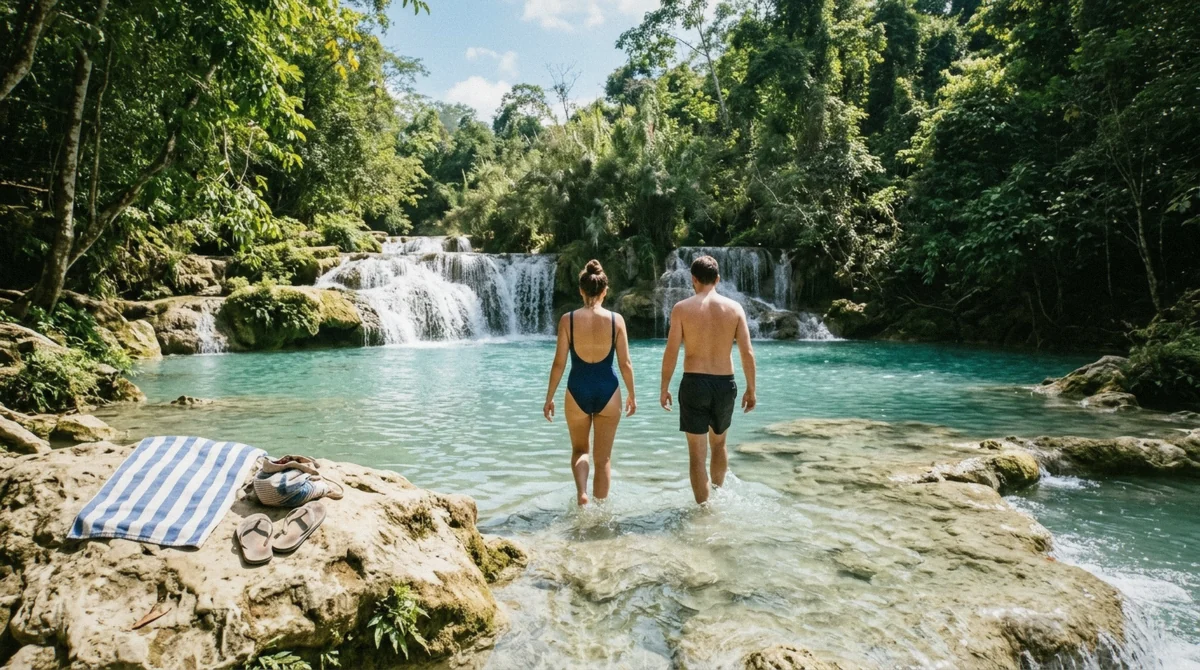
Can you swim in Kuang Si Falls? Yes, in the designated lower pools near the entrance, where the biggest is about chest deep and changing rooms sit on the bank. You cannot swim at the base of the 60 metre main cascade or in the signed terraces above it, and from roughly June to September the current closes the pools altogether for days at a time. The water sits in the low 20s Celsius all year, which is a shock in January and a relief in April.
Quick answer
Swimming at Kuang Si Falls is allowed in the designated lower pools only, five minutes inside the gate. The base of the main cascade and most upper terraces are signed no-swim. The water is a constant low-20s Celsius, the biggest pool is chest deep, and small fish will nibble your feet. Entry to all of it is inside the 60,000 kip ticket.
Key takeaways
- Lower pools yes, main cascade no, upper terraces mostly no
- Water sits in the low 20s Celsius year round because the river surfaces just upstream
- Swimming closes when the wet-season current runs hard, typically June to September
- Changing rooms on the bank, no lockers anywhere in the park
- The secret pool above the falls is fenced and signed No Entry
- Kuang Si Falls tours with swimming time schedule two to three and a half hours in the park
The Short Answer: Where Swimming Is Allowed
Three zones, three rules
The park runs uphill from the gate in a chain of limestone shelves. Only the bottom section is open to swimmers. Boards mark the rest, and they are easy to miss when everyone around you is climbing onto a rock for a photograph.
The distinction matters more than a rule usually does here. The lower pools are calm, shallow and monitored by the volume of people around you. The terraces above are fast over polished travertine with drops between them, and there is nobody stationed at the falls to pull anyone out.
Pool by Pool: What You Can Get Into
Working up from the gate
Distances below are walking times from the park entrance at an easy pace, and depths are those reported in dry season. Everything shifts a little as sediment moves between seasons.
| Where | Walk from the gate | Swimming | What it is like |
|---|---|---|---|
| First lower pool | 5 minutes | Allowed | Busiest, changing rooms alongside, shallow edges for children |
| Second and third lower pools | 8 to 12 minutes | Allowed | Deeper, about chest deep in the middle, trees standing in the water |
| Small cascades between the tiers | 12 to 20 minutes | Signed no-swim | Pretty and photogenic. Boards ask you to stay out |
| Base of the 60 m main cascade | 20 to 30 minutes | Not allowed | Spray, boulders and fast water, so view it from the bridge |
| Upper channels above the falls | Via 542 steps or the canal route | Not allowed | Fast water over polished rock, long drop alongside |
| The old secret pool | Fenced off | Closed | Trail built over by the staircase. Signed No Entry since 2024 |
The pools people miss
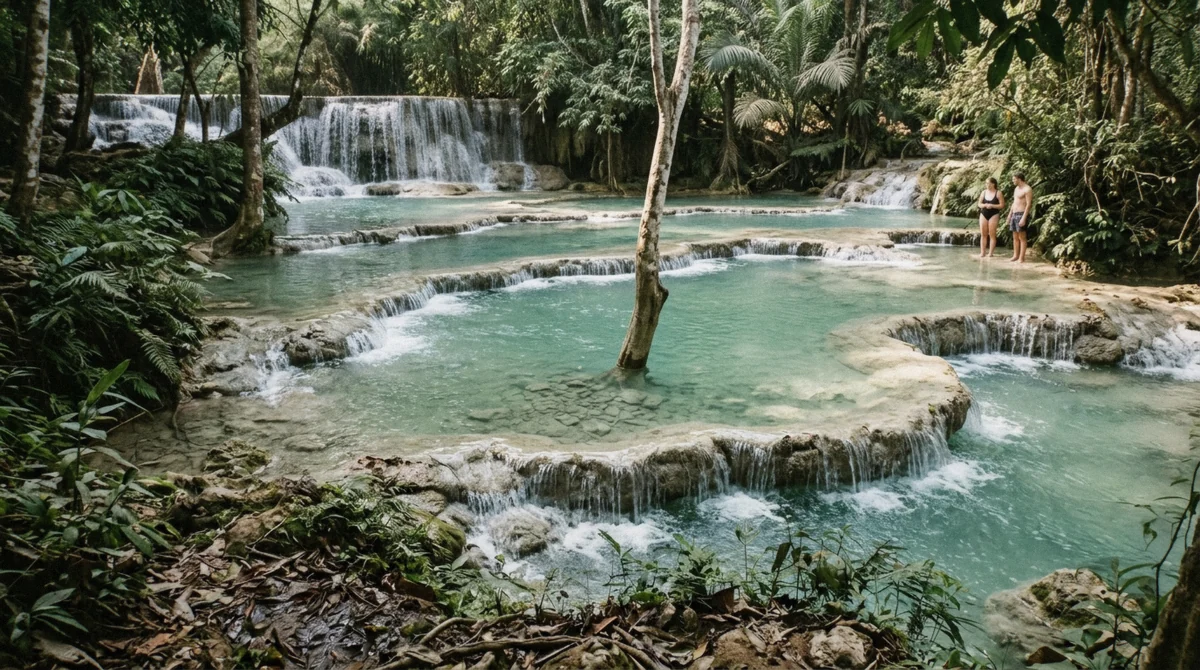
Most visitors stop at the first pool because it is the first thing they see and there are already twenty people in it. Walk another five minutes and the next two are quieter, deeper and framed by the bare trunks that make the photographs.
Walking up before you swim is the better order in every way: the light is on the water higher up, the crowd is behind you, and you finish beside the changing rooms rather than dripping your way back down to them.
Why the Water Is That Colour
Limestone in solution
The Nam Si surfaces about 10 kilometres above the falls and runs over white limestone all the way down. Calcium carbonate dissolves out of the rock, stays suspended in the water and scatters light toward the blue end of the spectrum. The same mineral settles out to build the travertine shelves that shape every pool.
Slow water carries more of it, so the blue peaks in the dry months when the flow is gentle. When the monsoon loads the river with soil instead, the effect is buried and the pools run brown. The colour tracks the river rather than the calendar, which is why a heavy storm can brown the water for a day in February and a dry week in September can clear it.
How Cold It Is, and the Fish
Colder than the air suggests
The water comes out of the hillside a short distance upstream and does not have time to warm up, so it holds in the low 20s Celsius through the year. On a 33°C afternoon in April that is the best thing in northern Laos. In January, when the air is 27°C and the shade is cool, the first thirty seconds take some resolve.
Nobody warns visitors about this and almost everybody mentions it afterwards. Get in from the shallow edge rather than jumping, and give yourself a minute.
The fish spa nobody asked for
The shallows hold hundreds of small fish, the same species used in commercial fish spas, and they will investigate your feet the moment you stand still. It tickles rather than hurts and it is free, which is more than the spas in town can say.
They concentrate where people gather, so the quieter upper pools have fewer of them. Nothing in the water bites, stings or requires caution beyond the rocks themselves.
When Swimming Closes
The wet-season window
From roughly June to September the pools carry monsoon volume. Two things follow: the current through the lower pools can turn strong enough that the park closes swimming outright, and the sediment makes the water opaque, so you cannot see the shelves and boulders underneath.
August is the extreme, with about 312 millimetres of rain across roughly 25 rainy days. Closures are not announced anywhere you can check in advance. You find out at the gate or from your guide, which is a good argument for booking something with free cancellation and watching the forecast. Our seasonal guide sets out the month-by-month picture.
- Reliably open: November to April
- Intermittent: May and October, depending on the week
- Often closed: June to September, and closed outright after heavy upstream rain
- Brown water is a warning even when nobody has closed anything: you cannot see what you would land on
| Months | Water | Swimming | What we tell visitors |
|---|---|---|---|
| November to April | Clear turquoise, low flow | Open | Bring swimwear, go in from the shallow edge |
| May | Rising, still often blue | Usually open | Check the colour at the first pool before committing |
| June to July | Brown, strong flow | Intermittent | Treat brown water as closed even if nobody says so |
| August to September | Peak volume, opaque | Often closed | Come for the cascade, leave the swimwear packed |
| October | Clearing through the month | Improving | Late October is the first reliable swim of the season |
Rules and Risks in the Water
What actually causes trouble here
There are no crocodiles, no currents that will carry you off and no lifeguards either. The injuries that happen at Kuang Si are mundane: slips on wet travertine and bad landings from rocks people jumped off without checking the depth.
The limestone edges are polished smooth and carry algae below the water line, which makes them slicker than they look. One well-known travel writer walked down barefoot because her sandals could not hold the wet stone. Grip matters more than style in your footwear here.
- Wade the landing zone before you jump from anything. Depths move with the sediment
- Sandals or trainers with grip, not flip-flops, on the paths and shelves
- Stay out of the signed sections however good the photograph looks
- Nobody is watching the water, so swim within your own limits and keep children beside you
- Do not climb the fence above the falls. The drop is real and help is far away
Changing Rooms, Valuables and Facilities
What the park provides
Simple changing rooms and Western-style toilets sit beside the lower pools. They get muddy through the day because everyone uses them to change, which is exactly what they are for.
There are no lockers anywhere in the park. Swim in shifts if you are carrying passports or cameras, or bring a dry bag and keep it where you can see it from the water. Wearing swimwear under your clothes from town saves you the queue and ten minutes of your visit.
- Changing rooms and toilets by the lower pools, no lockers
- Towels are not provided anywhere
- Food stalls and a restaurant near the entrance. Bottled water about 10,000 kip
- No cash machine at the park, and the ticket window takes kip only
- The park closes at 5:30 pm, so the last comfortable swim starts by 16:30
Who Should Stay on the Bank
If You are a nervous swimmer
Stay in the first pool, where the edges are shallow and there are people all around you
If You are travelling with small children
Use the shallow edges of the lower pools and keep them beside you. The drop-offs are abrupt in places
If The water is brown
Skip the swim. You cannot see the shelves, and that is when people land badly
If You visit in January and feel the cold
Come back after 14:00 when the air is warmest, or plan the swim for a March or April trip
If You want a photograph in an empty pool
Arrive at the 8:00 am opening and walk past the first pool to the third
If You only have two hours at the falls
Swim first, walk second. The half day trip is built around exactly that order
Swimming Questions
Can you swim at the bottom of the main waterfall?
No. The base of the 60 metre cascade is a no-swim area, marked with boards, and the water there is fast over boulders with constant spray. The bridge in front of it is the viewing point. Swimming is confined to the designated lower pools closer to the gate.
How cold is the water at Kuang Si Falls?
Low 20s Celsius all year. The river surfaces about 10 kilometres upstream and does not warm up on the way down, so the pools stay cool even when the air hits 33°C in April. In January the contrast is sharp enough that most people enter from the shallow edge rather than jumping.
Why is Kuang Si Waterfall so blue?
Calcium carbonate dissolved out of the white limestone the river runs over. It stays suspended in the water and scatters light toward blue, and it settles out to form the travertine shelves the pools sit in. Slow dry-season water carries the most of it, which is why the colour peaks between November and April.
Is it safe to swim in the falls?
In the designated lower pools in dry season, yes, with ordinary care. There are no lifeguards, the travertine is slippery below the water line, and depths shift between seasons, so wade before you jump. In wet season the current and the sediment make it genuinely risky, which is why the park closes the pools.
Where can you change and leave your bag?
Changing rooms and Western-style toilets sit beside the lower pools. There are no lockers anywhere in the park, so either swim in shifts or bring a dry bag and keep it in sight. Wearing swimwear under your clothes saves time at the busiest part of the day.
Can you still reach the secret pool above the falls?
No. The old hillside trail was built over when the 542-step staircase to The View went in, and what remains is fenced and signed No Entry. Guides published before 2024 still describe hiking to it. The legitimate route above the falls is the canal walk that approaches from the irrigation channels.
Do the tours give you time to swim?
Yes. The afternoon trip allows two hours of free time at the falls, and the canal hike allows three and a half. Both list swimwear and a towel in what to bring. Full-day combined trips leave two hours, which is enough for a quick swim but not a leisurely one.
If you take one thing from this page, make it the order of your visit: swim before you climb anything. The pools are warmest and quietest early and late, the walk up is better done dry, and the people who leave here disappointed are almost always the ones who spent their two hours on a staircase and never got in the water.